
Padrón
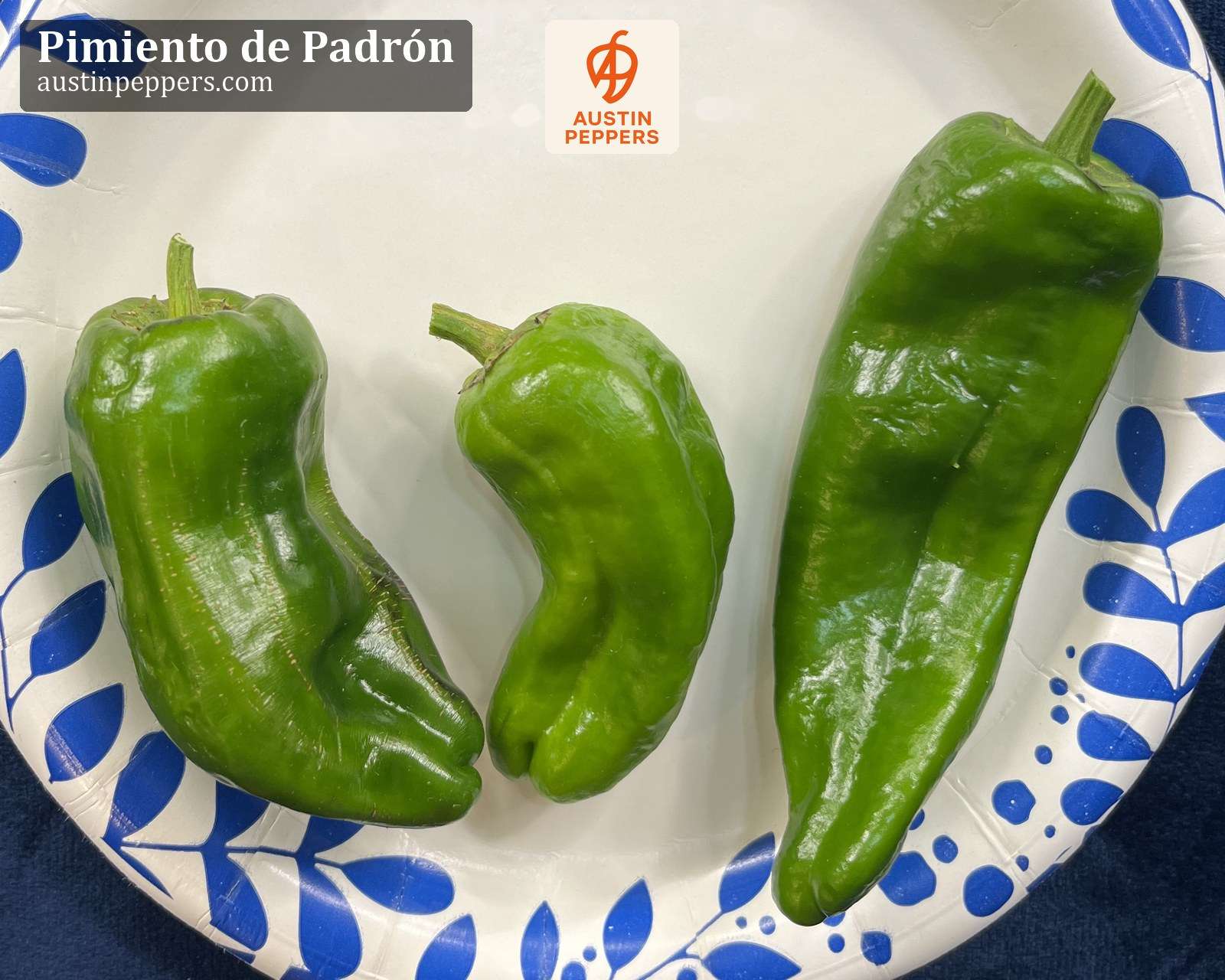
📷 Photo: Austin Peppers
We always want more photos of Padrón. Every photo you add is credited to you.

The Padron pepper comes from the municipality of Padron in Galicia, northwestern Spain, where the related pemento de Herbon holds EU protected designation of origin status. The pepper's fame rests on a game of chance summed up by a Galician saying: some are hot, some are not. Roughly one pod in a dozen or so delivers a surprising jolt of heat, and peppers left to mature longer or stressed by drought turn spicier, making each plate a small roulette. The classic preparation, pimientos de Padron, is simple: small green pods blistered quickly in hot olive oil and finished with coarse salt, served as tapas. Picked young and small, they stay tender and mild, which is how they are traditionally eaten.
Universal Pepper Nomenclature
One code for one pepper, no matter what people call it. Universal Pepper Nomenclature sits behind the names people use and describes the pepper itself: the species, the color it ripens to, its skin, the shape of the pod, and how hot it runs. The last three digits tell apart peppers that match on all of that.
Six parts, always in this order, always split by hyphens. The WikiPepper Foundation board issues every code. Editors cannot create or edit a code.
This code
- ASpecies: C. annuum
- RRipe color: Red
- SMPattern and skin: Smooth and Glossy
- JPod form: Standard tapered
- 2Heat: 1,001 to 2,500 SHU
- 009Serial number
The Padron pepper comes from the municipality of Padron in Galicia, northwestern Spain, where the related pemento de Herbon holds EU protected designation of origin status. The pepper's fame rests on a game of chance summed up by a Galician saying: some are hot, some are not. Roughly one pod in a dozen or so delivers a surprising jolt of heat, and peppers left to mature longer or stressed by drought turn spicier, making each plate a small roulette. The classic preparation, pimientos de Padron, is simple: small green pods blistered quickly in hot olive oil and finished with coarse salt, served as tapas. Picked young and small, they stay tender and mild, which is how they are traditionally eaten.
Last updated Oct 8, 2026
Contributors
- Austin PeppersPhoto credit: Austin Peppers
Edit history
- · Description · WikiPepper Data Steward
- · SHU upper · WikiPepper Data Steward
- · SHU lower · WikiPepper Data Steward