
Pepper Identifier
What type of pepper is this? Find out from the pod, the plant or both.
Tap what you see. Each answer trims 5,791 WikiPepper varieties down to the ones that fit.
Pod size and shape vary from plant to plant and are soft signals. Mature color is unreliable if the pod is not fully ripe.
How it works
The identifier uses only the fields stored on each variety in this database.
Each question is chosen to cut the current leaders fastest. The step count is the questions in that round. Asking stops sooner when few matches remain, or when no question left would split them. Further questions are optional.
Name the species and other species drop out. A stored texture that does not match removes the pepper. Shape, color, size and heat do not. Texture and shape are trusted ahead of color, and color ahead of size.
Shape and length are soft signals. Pods vary from plant to plant and run small, so a miss never drops the pepper. Overlapping length bands match. A band that only touches, or is a short step shorter, stays close.
Ripe color matches the final color or the dark stage. Purple or black beside red is a near match, either way. Red and orange are not a near match.
Heat is optional. Skip it if you have not tasted the pod.
The remaining varieties are ranked by score, best fit first.
What can you look at?
Pick one. You can switch any time, and your answers carry over.
Link to WikiPepper
Add the WikiPepper badge to your site.

What the pepper identifier does
The WikiPepper Pepper Identifier names a chili pepper from what you see, not from a photo. Answers match 5,791 WikiPepper varieties as of November 19, 2026, using the shape, ripe color, length, heat, leaf color and flower color stored for each one.
How do you identify a pepper plant?
Match the pod’s shape, ripe color, length, heat and leaf color against the values stored for each variety. Name the species if you know it.
The cap
Most pods arrive without one. If yours has it:
- Ring, a groove where the cap meets the stem: a strong sign of C. chinense.
- Teeth on the rim: C. pubescens or C. baccatum.
- Smooth rim: usually C. annuum or C. frutescens.
Baccatum teeth are small and can pass for smooth, so the identifier doesn't use the cap.
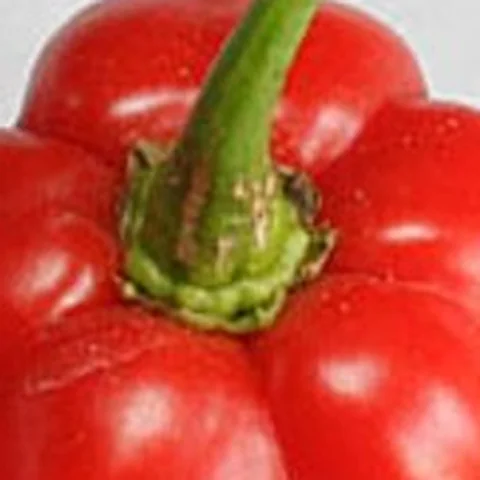 C. chinense: ring
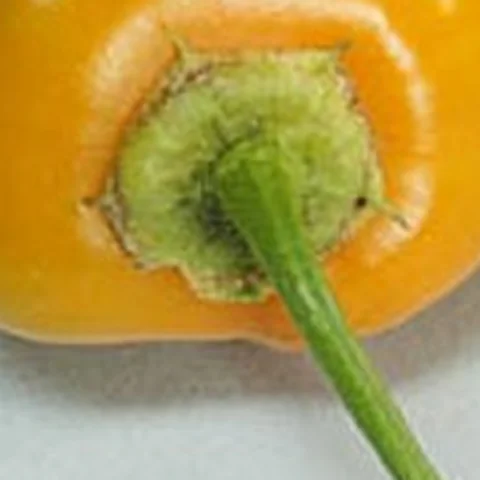 C. pubescens: teeth
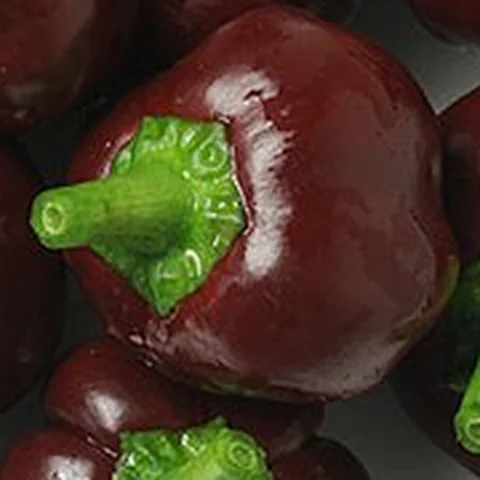 C. annuum: smooth
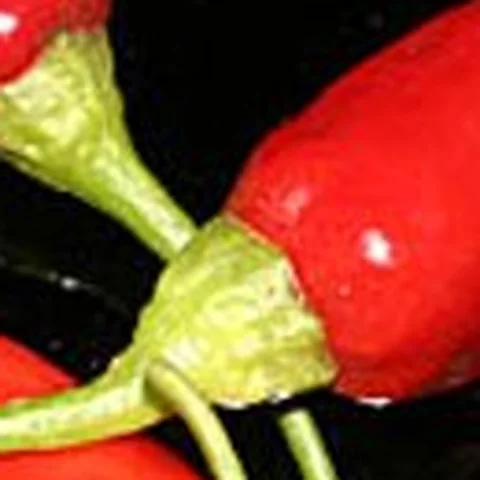 C. frutescens: smooth
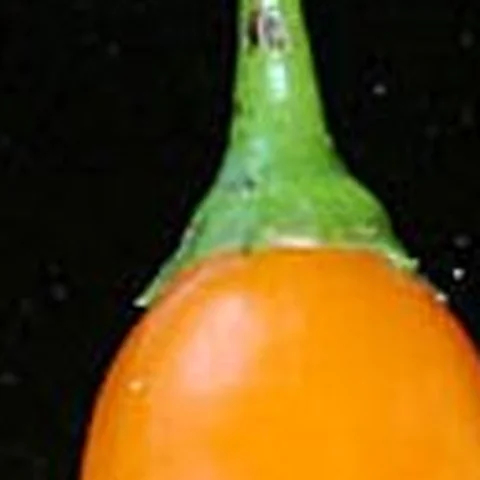 C. baccatum: small teeth
Example peppers by species
- C. annuum: Jalapeño, Chiltepín, Cayenne, Piquin, Poblano
- C. chinense: Habanero, Ghost Pepper, 7 Pot, Carolina Reaper, Scotch Bonnet
- C. frutescens: Tabasco, Wiri Wiri, Prik Kee Noo, Malagueta, Aji Bird
- C. baccatum: Sugar Rush Peach, Bishop's Crown, Peppadew, Aji Amarillo, Aji Fantasy
- C. pubescens: Rocoto, Brown Rocoto, Orange Locoto, Orange Rocoto, Rocoto Marlene
- Wild species: Cumari, C. galapagoense, C. flexuosum, C. eximium, Cobincho
Questions
What type of pepper is this?
The identifier compares what you enter with the shape, ripe color, length, heat, leaf color and other values stored on each WikiPepper variety. It does not read photos.
Is there an app or website that identifies peppers?
The WikiPepper Pepper Identifier runs free in any web browser, with nothing to install. It does not read photos. You answer questions about the pod and the plant, and it narrows 5,791 varieties to the ones that fit.
How can I identify different types of chili peppers?
Compare the pod and the leaves with the values stored for each variety: shape, ripe color, length, heat and leaf color. You can also name the species if you know it.
The tool matches answers against 5,791 live WikiPepper records, using the values stored on each variety. See also the pepper plant anatomy guide and the flower guide.