Poblano
📷 Photo: Jonathan Cutrer from San Angelo, Texas, United States via Wikimedia Commons, CC0

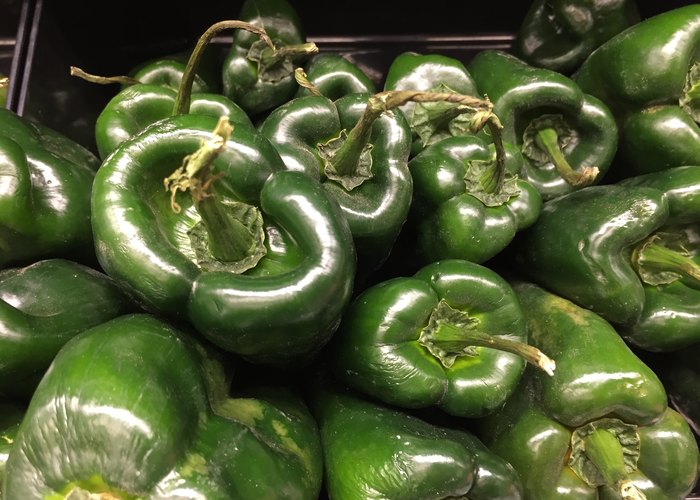
The poblano is a mild Capsicum annuum chili originating in Puebla, Mexico, from which it takes its name. It is one of the gentlest common chilies, typically only 1,000 to 1,500 Scoville Heat Units, though heat can vary unpredictably from pod to pod on the same plant. The large, heart-shaped pods have thick, sturdy walls and a deep green color that ripens to red. Fresh poblanos are earthy and mildly sweet, and their size and thick flesh make them the classic choice for chiles rellenos, roasted and stuffed with cheese or meat. Roasting deepens their flavor and loosens the tough skin. When ripened red and dried, the poblano becomes the ancho chile, one of Mexico's most important dried peppers, developing raisin-like, dried-fruit sweetness that anchors moles and adobos. This fresh-and-dried duality gives the poblano an unusually broad role in Mexican cuisine. Dried, the poblano becomes Ancho (from red-ripe pods) or Mulato (from brown-ripe pods).
The poblano is a mild Capsicum annuum chili originating in Puebla, Mexico, from which it takes its name. It is one of the gentlest common chilies, typically only 1,000 to 1,500 Scoville Heat Units, though heat can vary unpredictably from pod to pod on the same plant. The large, heart-shaped pods have thick, sturdy walls and a deep green color that ripens to red. Fresh poblanos are earthy and mildly sweet, and their size and thick flesh make them the classic choice for chiles rellenos, roasted and stuffed with cheese or meat. Roasting deepens their flavor and loosens the tough skin. When ripened red and dried, the poblano becomes the ancho chile, one of Mexico's most important dried peppers, developing raisin-like, dried-fruit sweetness that anchors moles and adobos. This fresh-and-dried duality gives the poblano an unusually broad role in Mexican cuisine. Dried, the poblano becomes Ancho (from red-ripe pods) or Mulato (from brown-ripe pods).
Last updated Oct 5, 2026